 Street Art-cade
A free hardware platform for art games — strange, wonderful sculptures on front porches that anyone walking by can play.
Vision
Strange and wonderful sculptures — interactive installations, like something you'd find in a museum or an odd arcade — on front porches. Anyone walking by can play. They energize neighbourhoods the way street libraries do: a new small-community, indie third place for strangers and neighbours to meet, chat and play.
Mostly it's an open platform for developers. Since a sculpture sits on the host's property, the host sets a few rules to respect the neighbourhood — the hours of play, and which games they don't want shown.
(Most people who want an art sculpture on their porch are open-minded and keen for novel experiences — just like art-game developers — so we don't think this will be a major problem.)
Developers
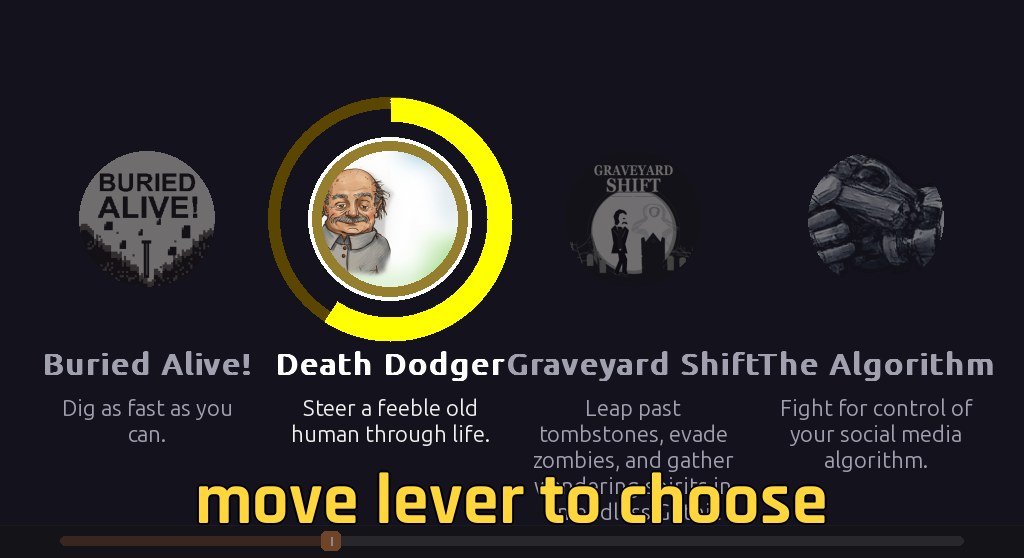
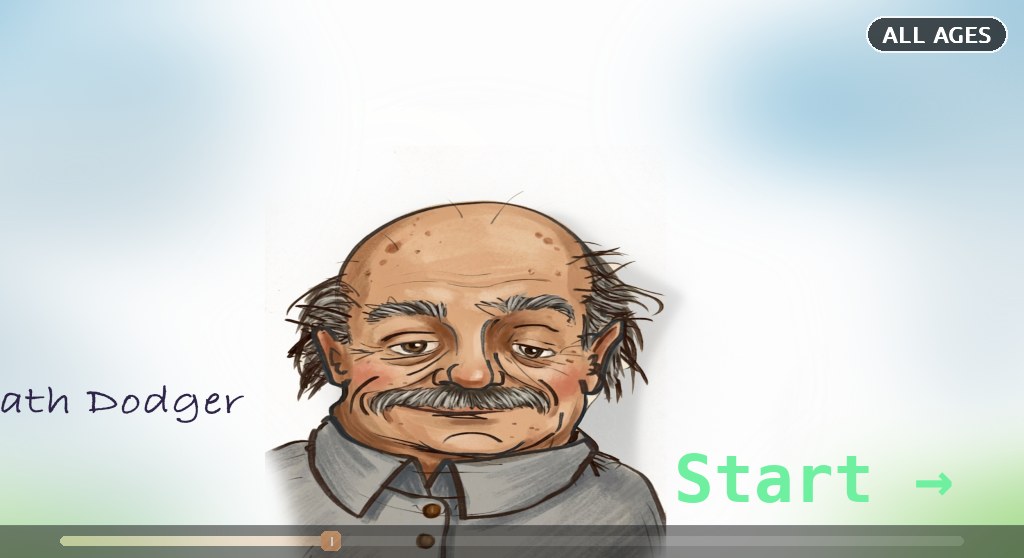
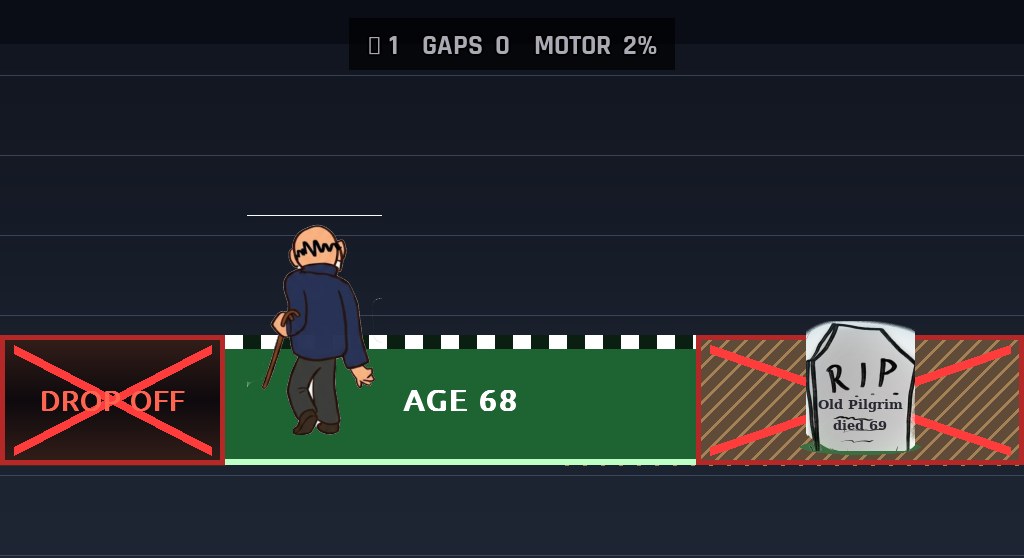
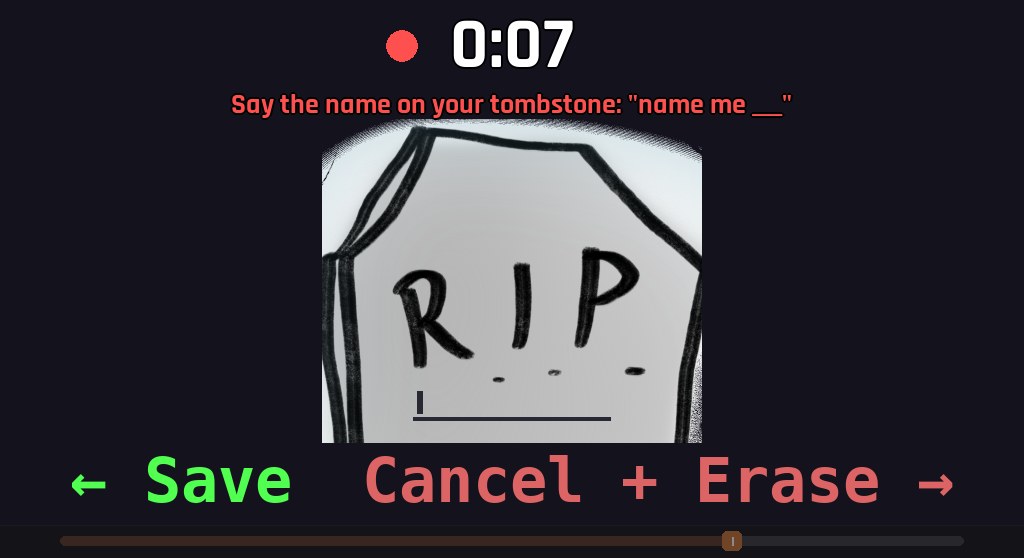
What every visitor goes through, shown with Death Dodger. Tap a screen to see it full size.
Existing experiences
- Loading…
Players
The games are played by the general public. So far that's mostly Australian and Asian college students, all genders, in short wordless sittings — party and casual game lovers, confused by complex strategy and not inclined to read written instructions. They want novel, arty experiences with short, simple, clear instructions like "push the lever" or "dance with it" and goals like "try to ___" / "don't ___".
The platforms
As of September 2026
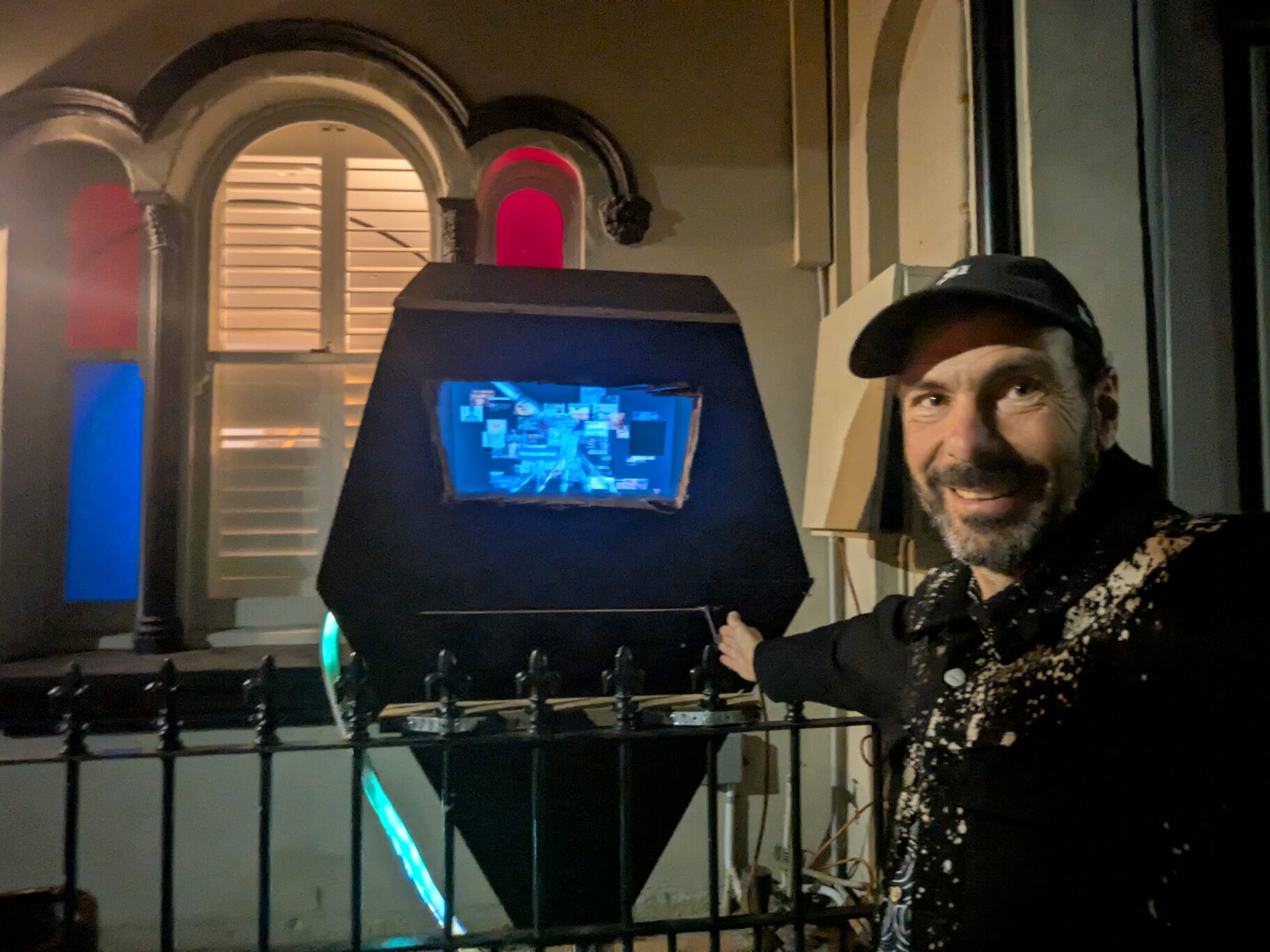
There are two sculptures so far. The first is The Algorithm: a foreboding, two-metre-tall black, coffin-shaped case with an ordinary computer monitor and one big powered slider: a heavy, motorized, force-feedback lever on a 600 mm rail that resists human effort up to 1000 N — really hard to push. It feels like arm-wrestling. Plus a strip of lights, a mic and a quiet, muffled speaker. That's it. No buttons.
Its SDK lets anyone build games on it. What it can do, videos and example games ›
What could be on the next porch
Fingerdance, the second sculpture above, is a prototype of Sentience, a separate work. art.josh.whitkin.com
After that, who knows — robot flowers, a confession booth, a dollhouse, giant robot hands, each with its own very different hardware controls.
Cabinet designs — eight forms, with a novel control each.
Want art on your porch?
We are building sculptures for friends and neighbors who want it. Email your basic info and what you'd like to have, and we'll get back to you!
Got an idea for a new experience?
Tell us what you'd love to walk up to on a porch — and maybe we'll get a developer to build it. Anyone can read the ideas here.
Recent ideas
Loading…
How to build
For The Algorithm, make a game in Python: a class that implements run(ctx).
The class lets you read the lever position, set motor strength and move
targets, light the LEDs in patterns, draw on screen, record and play
sounds, and return a result — and test it all on simulated hardware.
- The API — it's really simple, one page.
- Hello World — a very minimal "game."
- Death Dodger — a complete real game (source).
Fingerdance isn't open to outside developers yet; its developer API is coming soon.
Why should art-game developers build for this platform?
- Exposure. It's a free way to get your game played.
- You can't help it. If you like building art games, you just want people to play them. So do we.
Notice we didn't say "money." The entire project is free and non-commercial. We don't allow ads (a grey area — Josh decides what counts as an ad). The platform API is open source. We don't ask for any rights to your game. Feel free to link out to other platforms where you charge for it.